
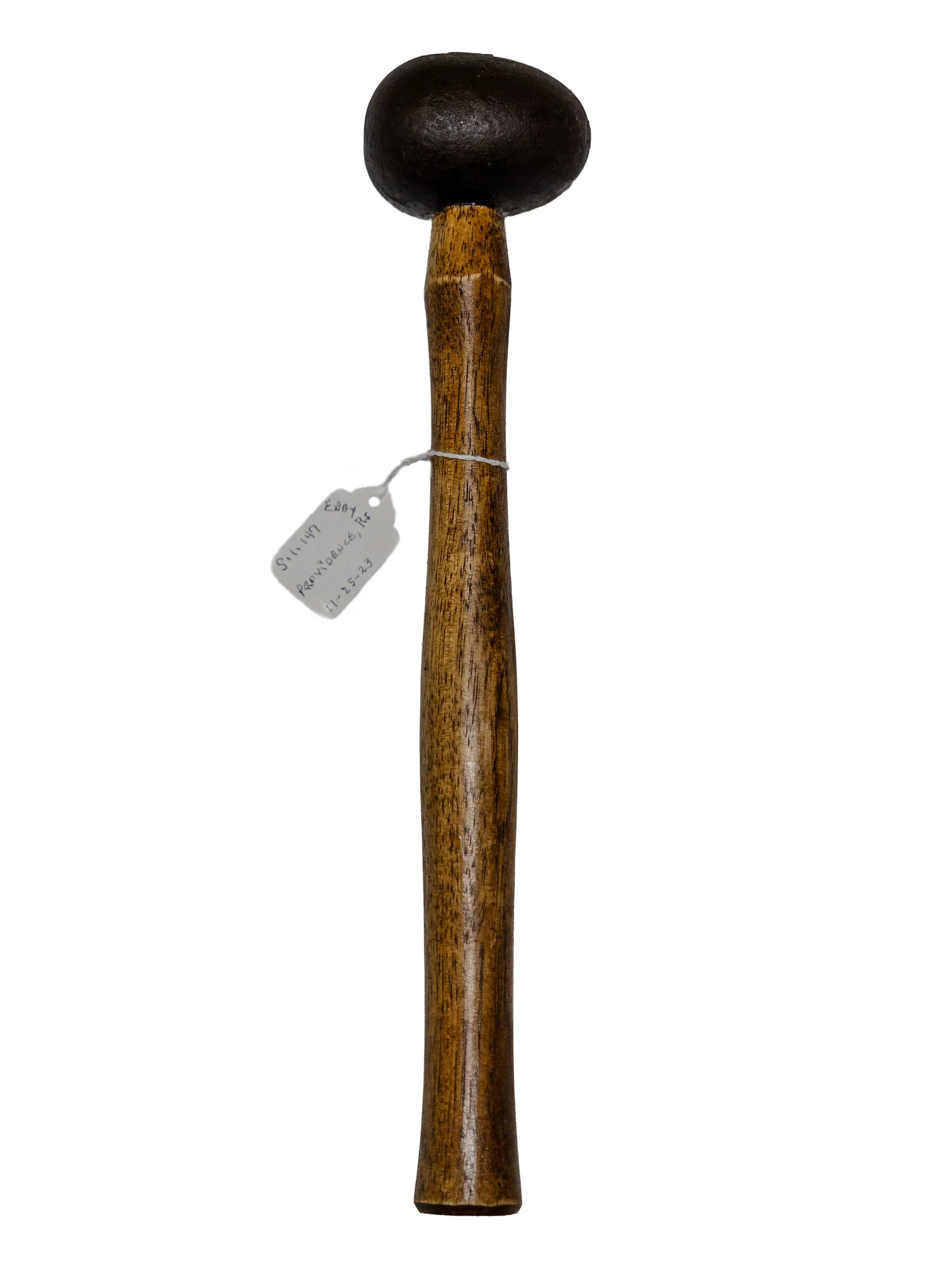
Leatherworking Hammer
These hammers feature a rounded head to prevent leather from marring. This type of hammer is used for forming leather, sharp folds, tapping stitches and lace, and more.
Source
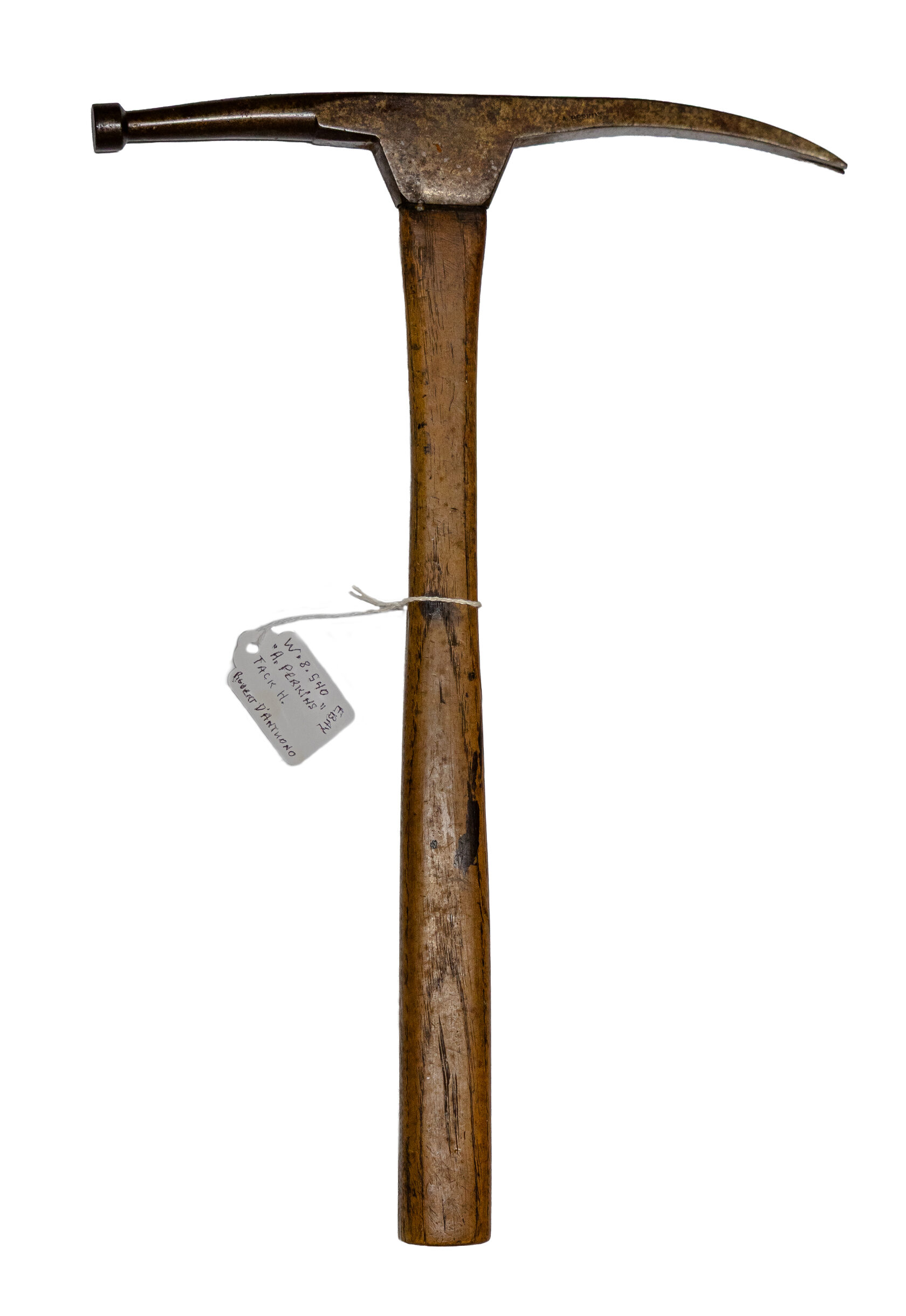
Tack Hammer
These hammers are usually smaller as they are used for small nails and tacks. They are typically used for upholstery.
Source
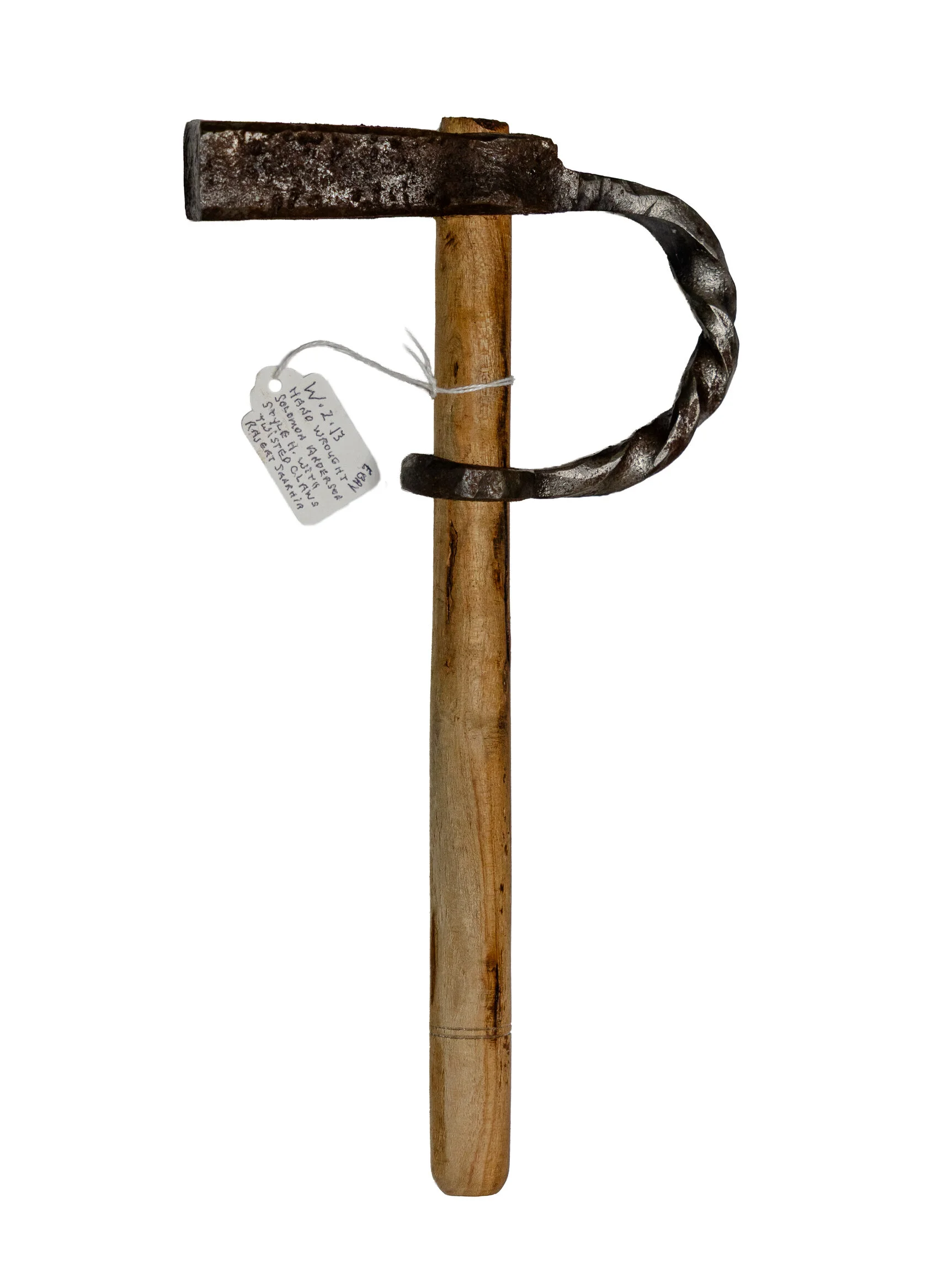
Solomon Anderson Hammer
This is a rare specialty hammer, a type of claw hammer. The wraparound design prevents the handle from becoming loose or breaking when using the claw. It is typically used for carpentry.
Source
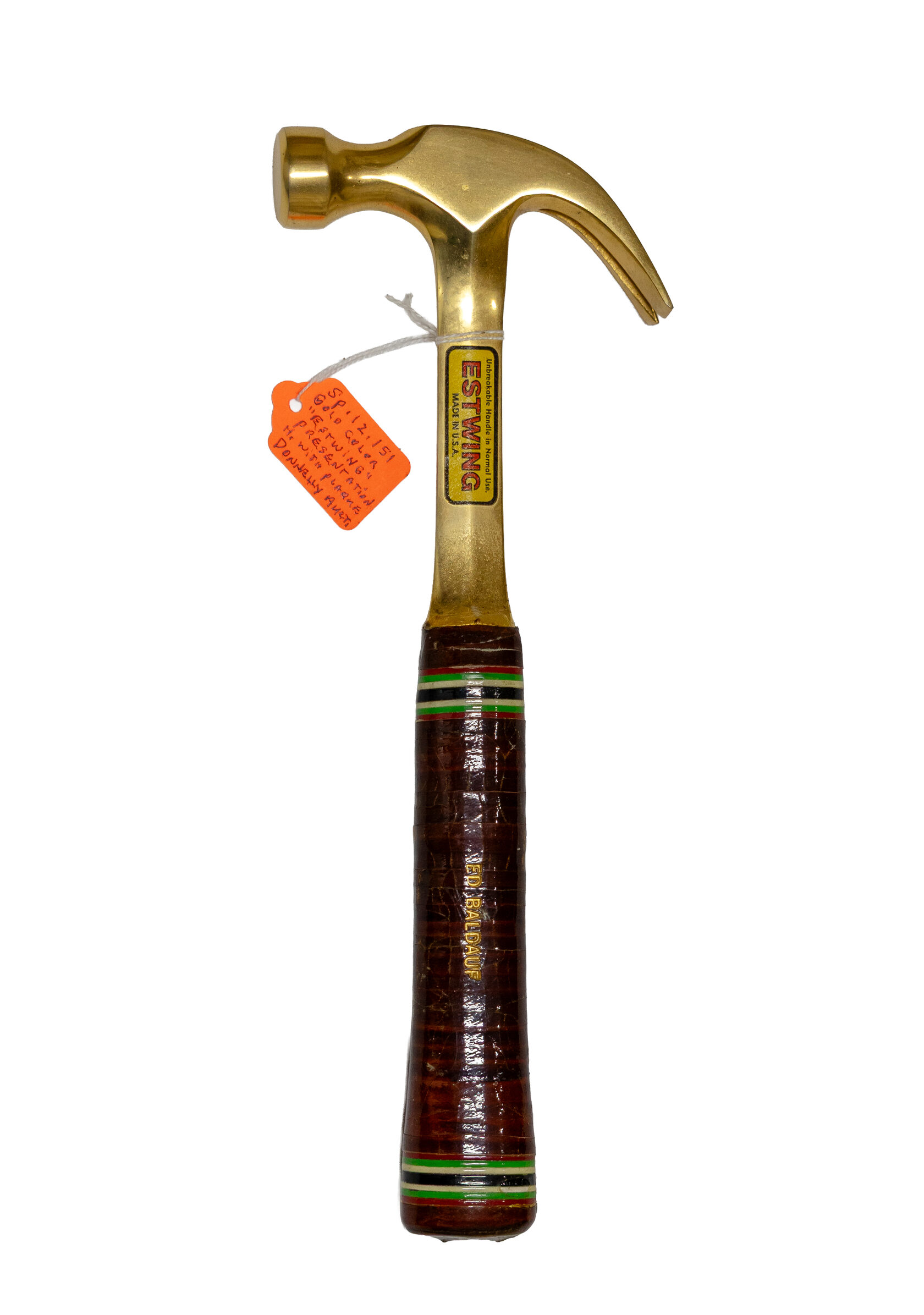
Claw Hammer
Claw hammers are the most widely used hammers. One side of the head is used to hammer nails, while the other is used to extract nails. This specific hammer is a specialty Estwing hammer that is usually given as an award.
Source
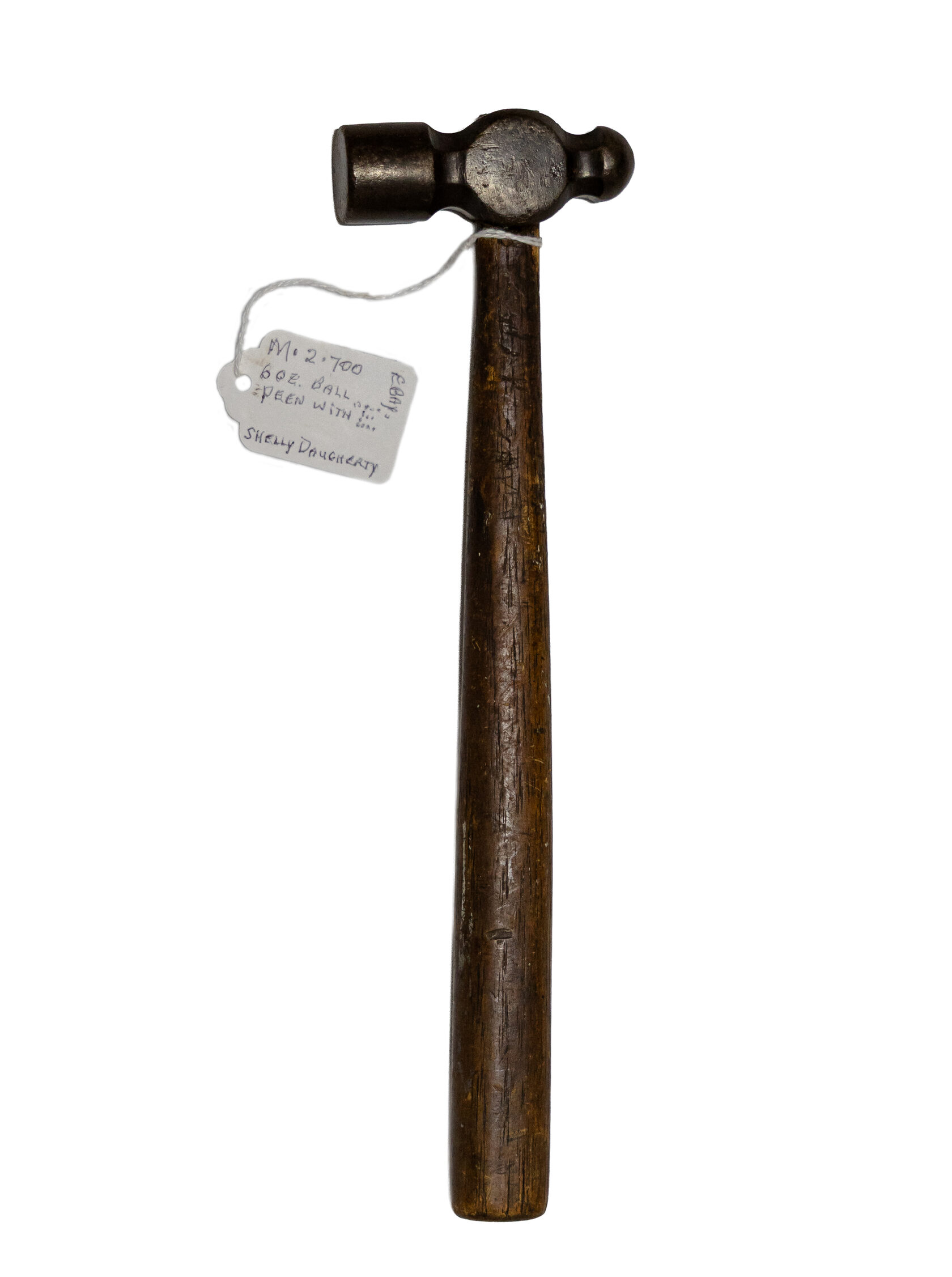
Ball-Peen Hammer
These hammers feature a smaller head with a flat impact area on one side and a rounded head on the other side. This type of hammer is used in metalworking for tasks like riveting.
Source
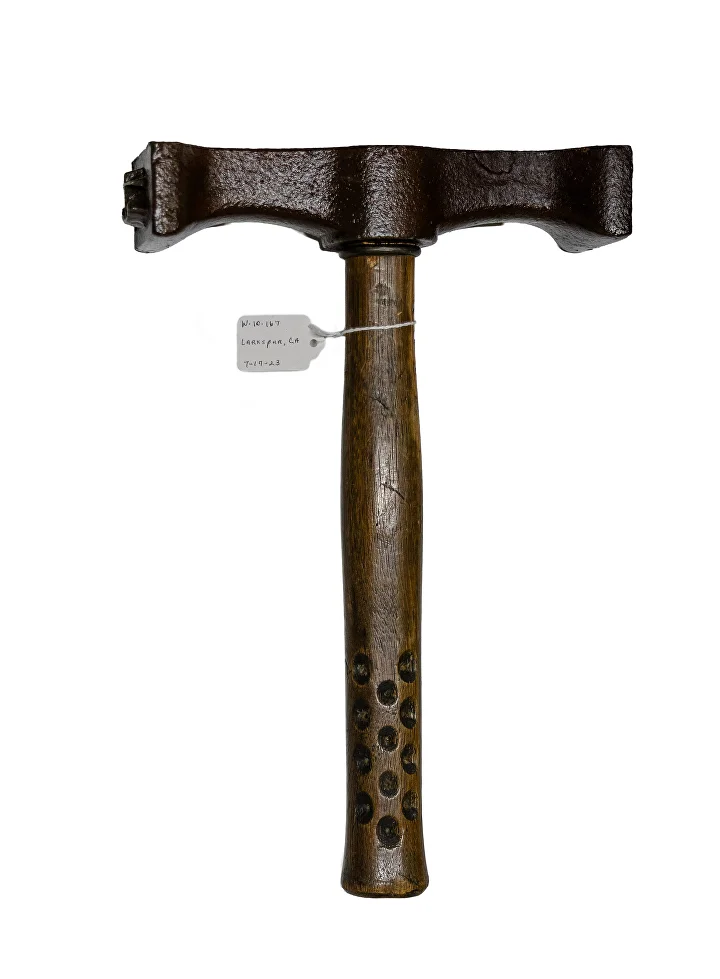
Marking Hammer
These hammers feature a custom symbol or character on one end of the head. They are used for marking leather, wood, or metal, typically for identification purposes. This specific hammer has an anchor stamp on it.
Source
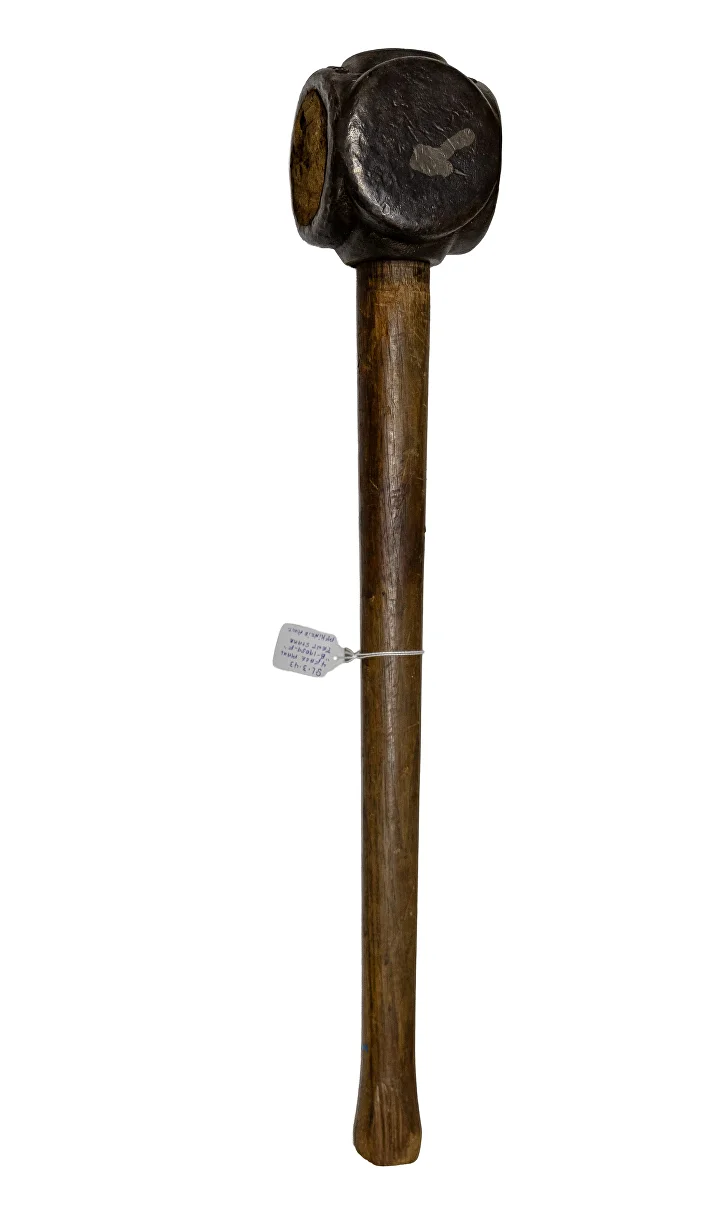
Maul Hammer
These hammers are heavy and made to prioritize power over precision. They are most commonly used for driving posts, fences, and stakes. This particular hammer is a four-faced maul.
Source
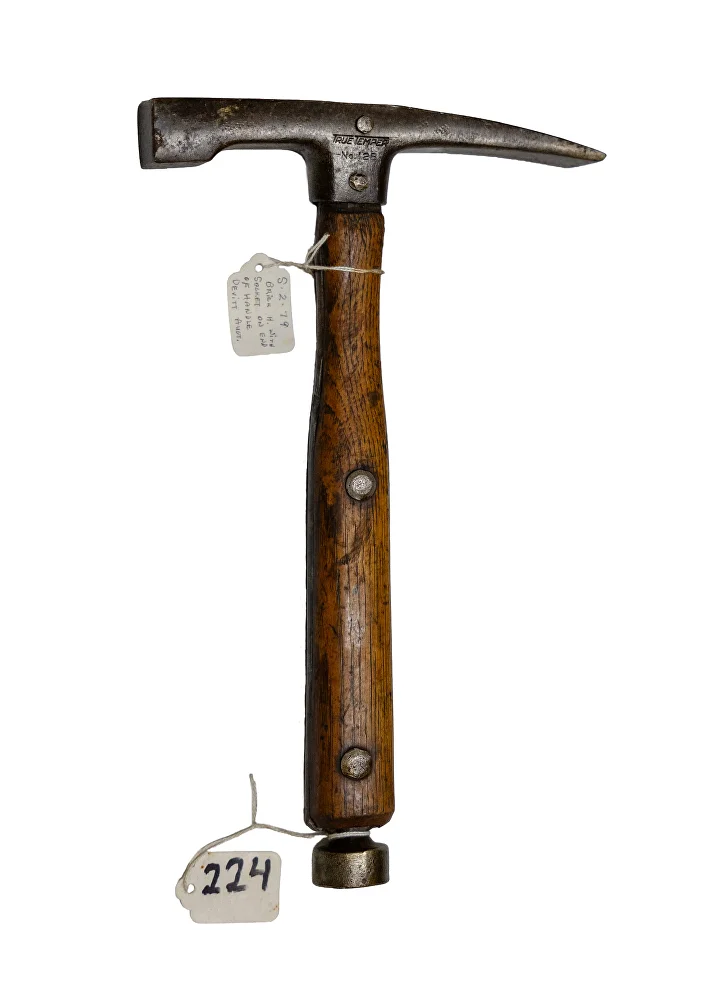
Brick Hammer
These hammers feature a blunt end on one side of the head and a chisel-shaped end on the other side. They are often called stonemasons’ hammers because they are used to split stones, hard masonry, and round off edges and small pieces of stone.
Source
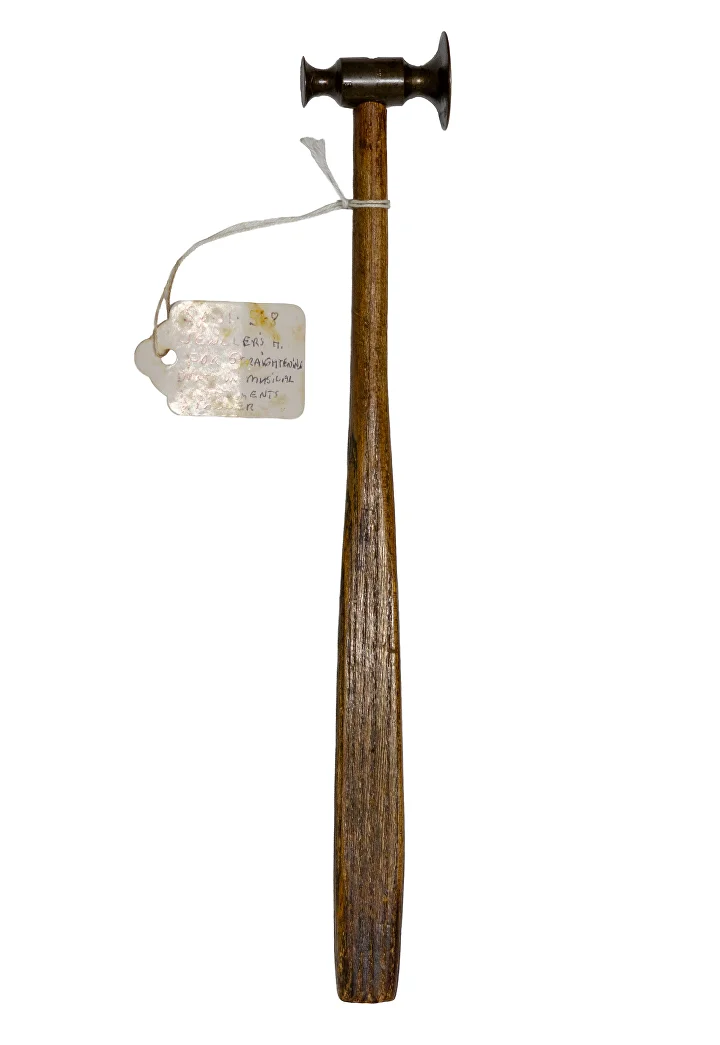
Jeweler’s Hammer
These hammers are usually smaller as they are used for small nails and tacks. They are typically used for upholstery.
Source
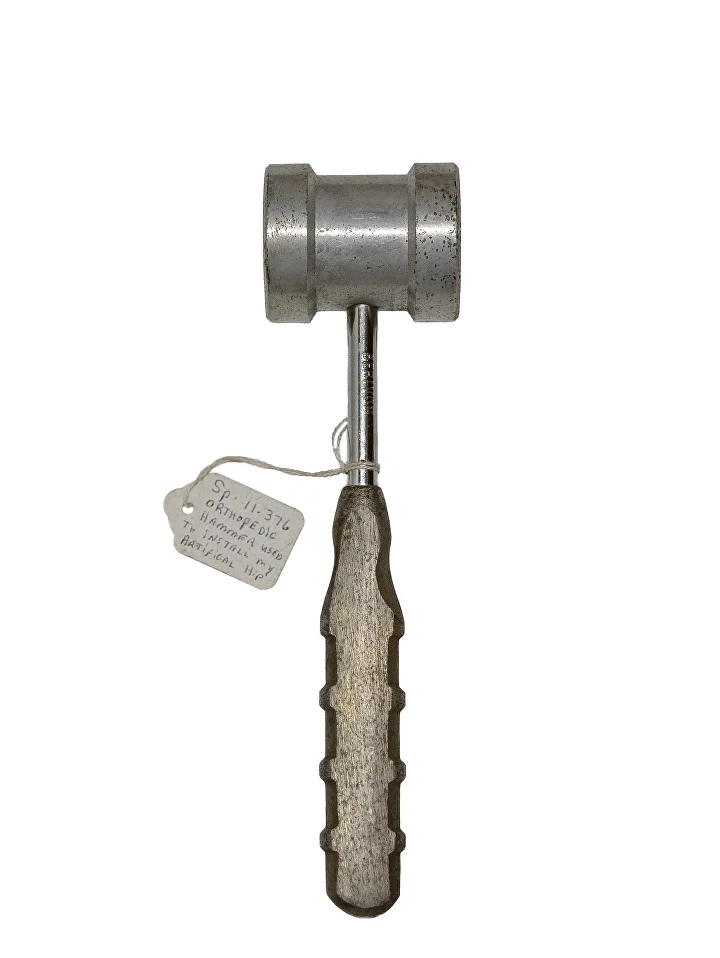
Orthopedic Mallet
These hammers are specialized stainless steel medical tools used by surgeons in orthopedic surgery. They are most often used for joint replacements, driving nails or screws into bone, and bone cutting and shaping. This specific hammer was used in Scotty Fulton’s hip replacement surgery in 2004.
Source
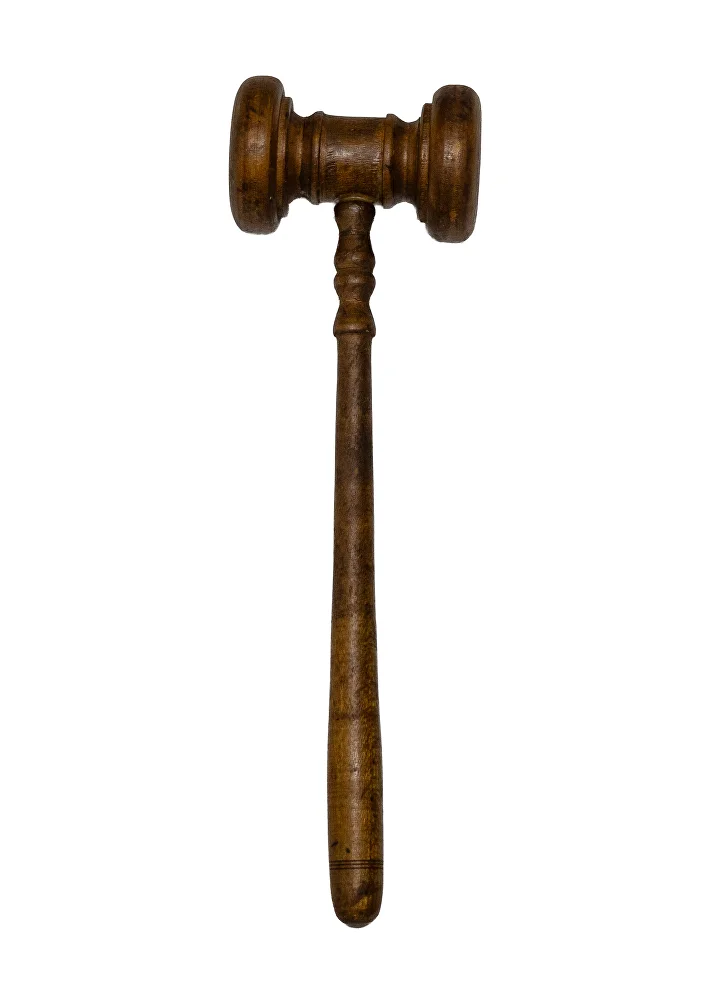
Gavel
These small, compact, hardwood hammers are designed to gain the attention of crowds. They are commonly used by auctioneers, judges, and at public meetings to demand control.
Source
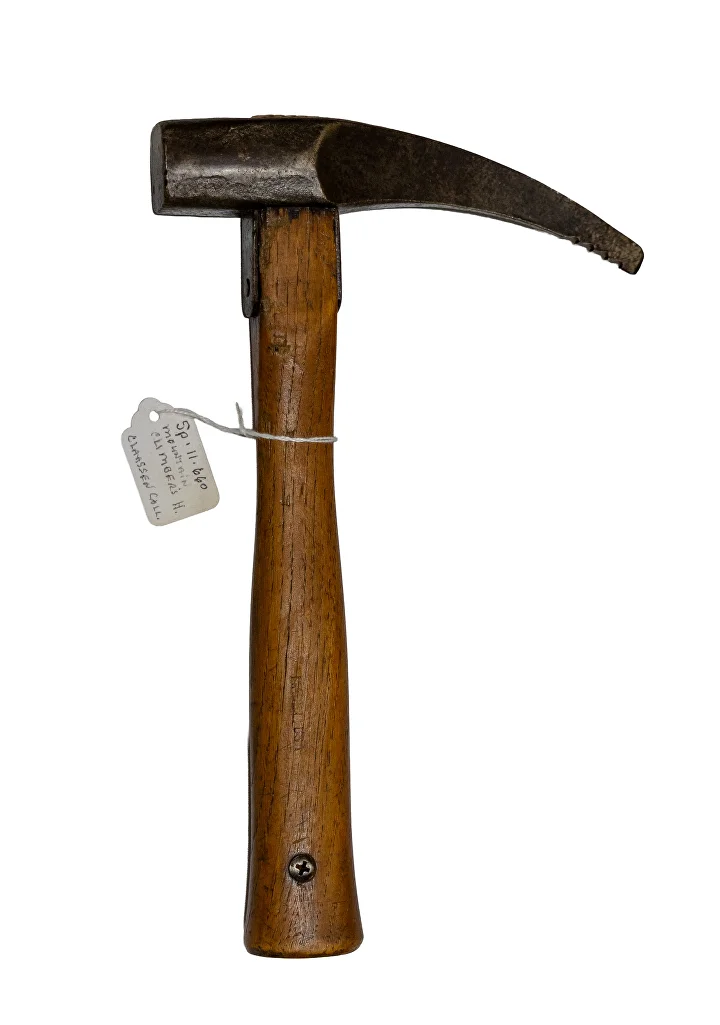
Alpine Hammer
These hammers are specialized ice axes, featuring a hammerhead on one end and a pick with sharp teeth on the other end. They are used for mountaineering and ice climbing, picking ice out of cracks, and placing pitons.
Source
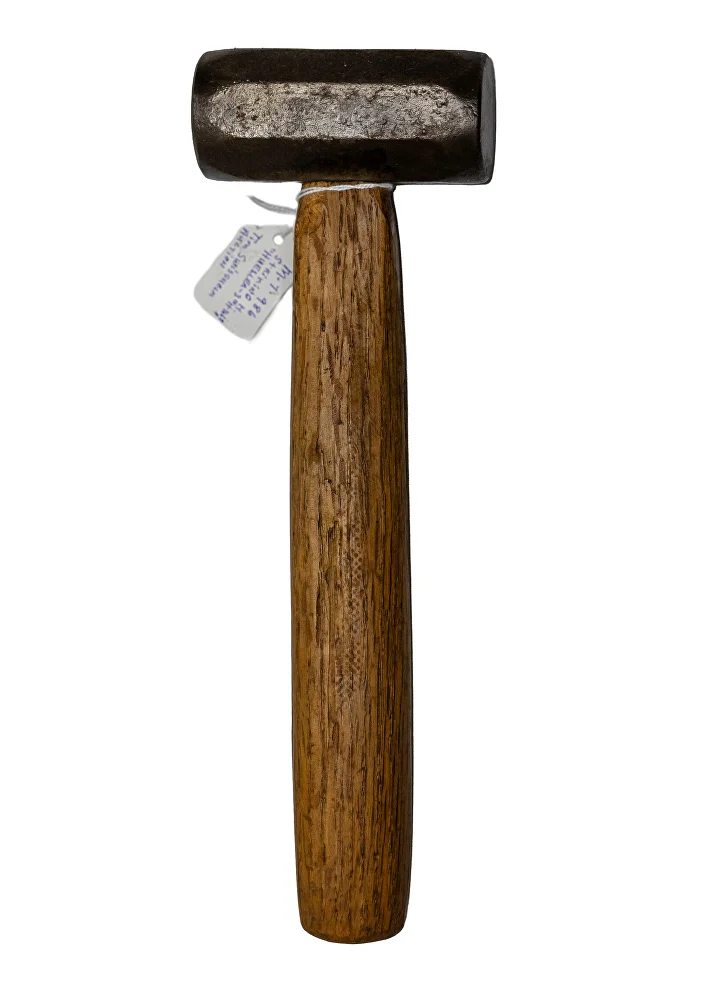
Blacksmith Hammer
These hammers are designed for multipurpose forging. Blacksmiths use it to bend and chip away at hot metal materials. This specific hammer is a double-faced blacksmithing hammer.
Source
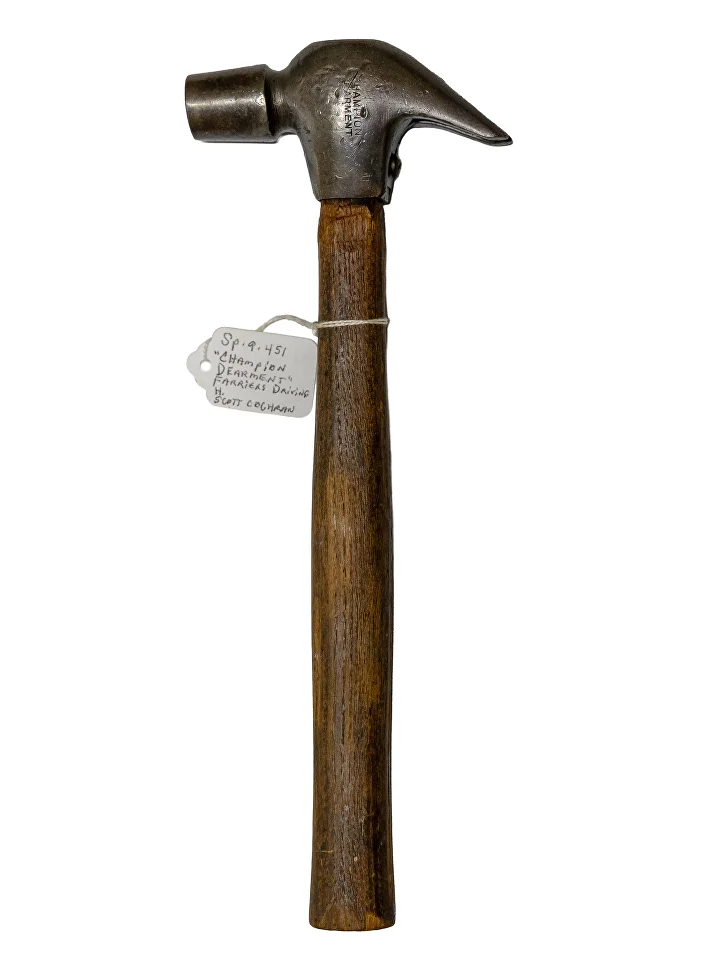
Farrier Hammer
These are specialized hammers used by farriers for horseshoes. There are two main types: driving hammers and rounding hammers. Driving hammers are used for securing nails with accuracy, while rounding hammers are used for shaping and finishing shoes. This particular hammer is a clean claw driving hammer.
Source
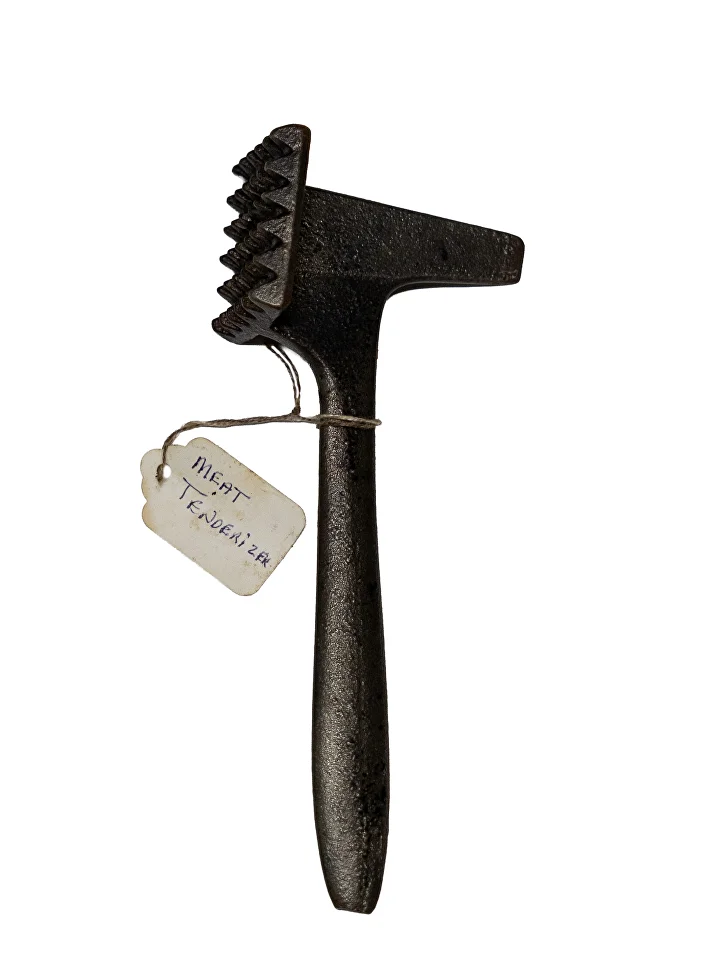
Meat Tenderizer Hammer
These hammers are kitchen tools designed to soften meat. They feature a flat side that is used for pounding, and a spiked side that is used to break down tough muscle fibers.
Source


Loneliness After Spousal Loss
Drag the slider to see how loneliness increases for women and men over time after losing a spouse.
- ~68%Women's likelihood of loneliness increased by widowhood.
The Journals of Gerontology - ~155%Men's likelihood of loneliness increased by widowhood.
The Journals of Gerontology